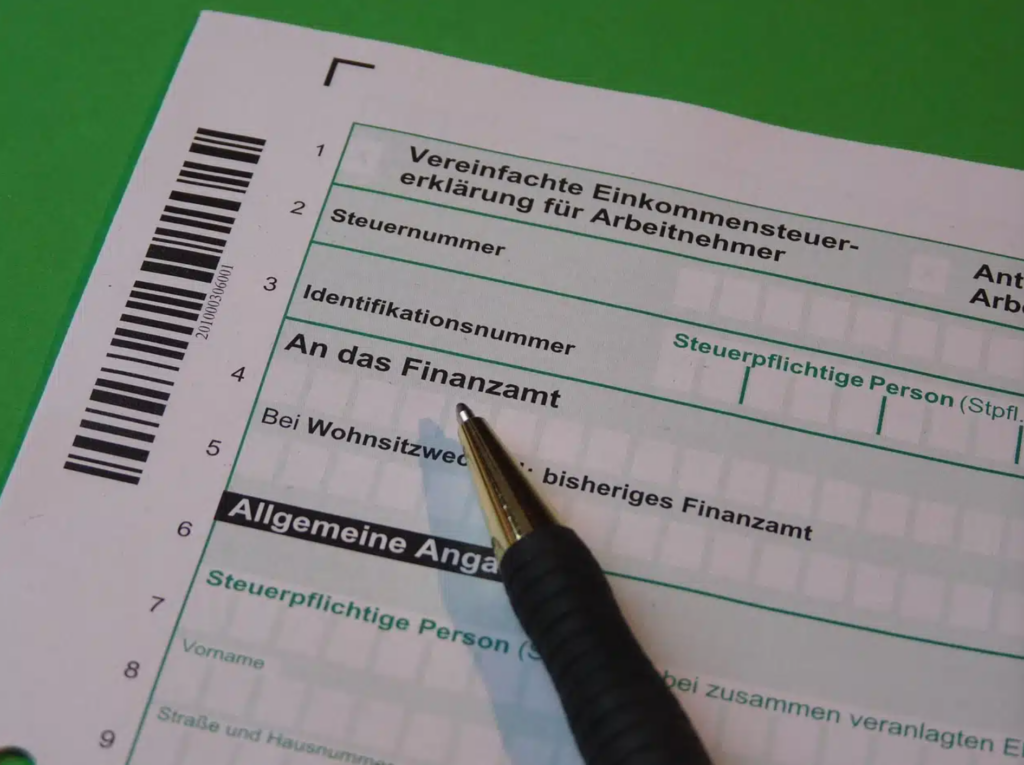
Do you pay alimony to your ex-partner and are taxed in Germany? A well-structured assessment—with Annex U and agreement to limited income splitting—can indeed reduce the tax burden while organizing formalities. In the text, we show when alimony for the ex-partner is worth it as special expenses, when extraordinary burdens are more advantageous, how to coordinate the transfers, obtain the necessary approvals, and make any necessary tax adjustments if alimony for the ex-partner is due after divorce. In short – less stress, more concrete savings, and you know exactly what and when to do it.
Alimony for the Ex-Partner in Germany – when is Annex U worthwhile and how to maximize tax concessions?
If you pay alimony to your ex-partner and are assessed in the German system, Annex U can indeed reduce your tax burden, but under certain specific conditions. Firstly – the consent of the other party to the so-called limited income splitting. This is usually given by signing Annex U, although a separate, written statement is legally permissible. Secondly, payments must be documented: from 2025, the tax office requires the transfer to be made to the eligible person’s account (and not in cash). Thirdly, the deduction amount as special expenses reaches €13,805 and is reviewed annually (plus any health and long-term care insurance contributions paid for the ex-partner). This solution is particularly advantageous, if you have a higher tax rate and the alimony for the ex-partner results in a moderate burden on them. Also note that in the year of separation joint assessment can exclude the deduction – more on that below.
In practice, it is worthwhile to proceed sequentially: First clarify with a lawyer/tax advisor whether your benefits qualify as special expenses (Annex U) or if extraordinary burdens are more suitable (the maximum amount there in 2025 is €12,096, plus contributions to basic health and long-term care insurance on the recipient’s side). Then secure the consent – preferably in writing and with a clear clause on tax compensation (if applicable). Next, pay attention to regular transfers, transfer descriptions, keeping receipts, and ensuring amounts align with what you report in the tax return. This way, the alimony payments for the ex-partner not only fulfill their purpose but also reduce your tax burden. And yes – you can only deduct what you have actually paid, so punctuality and documentation are crucial.
Alimony for the Partner after Divorce and Limited Income Splitting – Approvals, Signatures, and Tax Compensation
Although the term income splitting may sound unappealing, it is actually a simple mechanism: You deduct, and the other side declares the income. The key lies in consent. Even though case law on the duty to cooperate is often positive, you actually need a solid document—preferably the signed Annex U or an equivalent statement. To avoid having to enforce your rights in court, you should agree on the rules “in advance”: who and how tax compensation will be calculated (cost equalization), when the refund occurs, and document the impact of the deduction on both sides. A good practice is a framework clause in the post-divorce agreement: agreement to income splitting + mechanism for calculating compensation + payment date. This way, the alimony for the ex-partner is settled in an orderly manner and avoids conflicts.
A simple tax return in 12 minutes?
Choose Taxando!
Organizationally, a simple workflow helps: annual reconciliation of statements (your deductions, their repayment/refund), a short Excel file with the calculation of the difference and a balancing transfer with a clear subject. It is also advisable to clarify in advance whether health/long-term care insurance contributions apply and if so, who pays them when. Remember that alimony for the ex-partner is one thing, but the comfort of communication is another: less stress means transparency – you show amounts, attach receipts, leave no room for speculation. The result? Income splitting becomes an instrument of financial order, not a source of tension.
Alimony for the Ex-Partner – how long do you have to pay?
In Germany, we differentiate between spousal support (during separation) and post-divorce alimony. The former usually lasts until the divorce is legally binding, but the amount and duration depend on the financial situation and the standard of living during the marriage. Post-divorce alimony is based on the principle of personal responsibility: Generally, everyone is responsible for themselves, unless there are legal requirements (taking care of young children, illness, disability, exceptionally long marriage). The court can limit and review the amount and duration of support if circumstances change. If you are an entrepreneur, the court considers the income of the last few years to determine actual payment capacity. This is important because alimony for the ex-partner is not “forever” – it depends on conditions and evidence.
Then “life factors” come into play. A new relationship of the recipient can change the assessment of needs if conditions are met. Illness or occupational rehabilitation can also extend the support. In case of permanent changes in income (e.g., decline in orders, company restructuring), it may be worthwhile to order a recalculation and possibly submit a change request. Always expect the court to verify data reliability: business expenses, depreciation, “in-kind benefits” (e.g., company car). And when thinking about the “end date,” rely not on schemes, but on facts – documents, medical reports, descriptions of child care, proof of professional activities. Only in this way can you prove how long alimony for the ex-partner in your case is justified.
Are you an entrepreneur? Here’s how you can account for alimony for the ex-partner – Limits, Health Insurance Contributions, and Transfers
For entrepreneurs, it is often most difficult to connect tax law with family law. From a technical point of view, you have two tax paths: Special expenses with Annex U (limit €13,805 + contributions for the recipient) or extraordinary burdens (limit €12,096 in 2025, plus basic contributions). On the first path, you cannot do without the consent of the other party and documented transfers. On the second—you must meet the conditions of this preference yourself, and from 2025, transfers to the recipient’s account will be counted as with special expenses. It is important that in the year of separation, when you opt for joint assessment with the spouse, you cannot deduct benefits paid to him/her at the same time—a common mistake that many make.
It’s worth using a checklist to help bring order to the documentation:
- Firstly – determine where you finance the benefits from and if you have continuity in transfers (consistent payer account, clear titles).
- Secondly – agreement on income splitting and cost equalization – in writing, with a deadline for reconciliation and calculation method.
- Thirdly – proof of payment of contributions for the recipient (when you take over their financing).
- Fourthly – adjust for actual flows within the company to avoid unnecessary transfers between accounts.
- Fifthly – Coordination with the tax advisor: check whether it is more advantageous in your situation to account for alimony for the ex-partner as special expenses or as extraordinary burdens.
If you pay attention to each of these steps, the alimony benefits will become a predictable part of your tax plan.
The most common mistakes in alimony for the spouse after divorce – check if you are making any of them
The first common mistake is the joint tax return in the year of separation and simultaneously trying to deduct benefits paid to the spouse. Unfortunately – this excludes each other. The second mistake: no firm consent to income splitting. Without this, Annex U often remains just a paper in the folder and your deduction lapses. The third problem – cash. From 2025, the tax office expects a transfer to the recipient’s account; otherwise, you risk rejection. The fourth trap: lack of tax difference equalization to the other party, although agreed upon. This is the simple way to conflict and possibly blocking consent in subsequent years. The fifth point: inaccuracies in the amounts between what you pay and what you declare in the tax return – the authority loves consistency in the numbers.
There are also additional aspects that can be significant. . Transfer titles without specifying the month/period – in the case of an audit, it is more difficult to link payments to the obligation. Lack of proof for paid health/long-term care insurance contributions – you lose additional deductions. Failing to update the agreement under changing circumstances (e.g., work, health, new relationship) – the alimony for the ex-partner remains on the old conditions, even though it should be reviewed. And finally: lack of consistent correspondence – maintain a line of communication, archive agreements. If you check off these points, alimony for the ex-partner after the divorce becomes less stressful, and your tax return in Germany more secure and clearer⟩.

Maciej Szewczyk
He gained experience as a consultant on IT projects for many international companies. In 2017, he founded the startup taxando GmbH, where he developed the innovative tax app Taxando, which simplifies the filing of annual tax returns.
Maciej Szewczyk combines technological expertise with in-depth knowledge of tax regulations, making him an expert in his field. In his private life, he is a happy husband and father and lives with his family in Berlin.