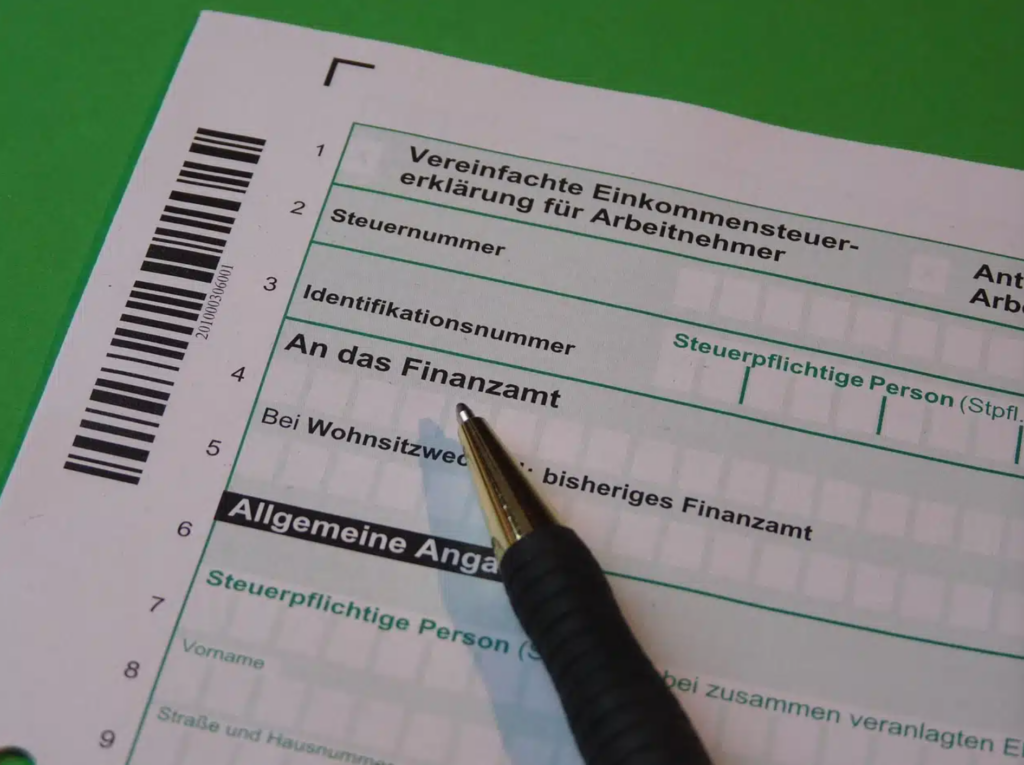
Running a business in Germany is becoming increasingly popular among Poles. This is not surprising – the German form of sole proprietorship, known as Gewerbe, offers clear business principles and simplified bookkeeping requirements. Nevertheless, entrepreneurs face the annual challenge of tax returns, which can be particularly stressful in a foreign country. In this guide, we explain step by step how to file the trade tax return quickly and securely, to avoid common mistakes and fully exploit the possibilities of the German tax system. We also show how modern online tools can significantly simplify the entire process.
Small Business in Germany – Getting to Know the Basics of Gewerbe
Starting a business in Germany is a step that more and more Poles are taking in search of financial stability abroad. The Gewerbe, the German form of sole proprietorship, opens up wide development opportunities for entrepreneurs in trade, services, and crafts. This solution is characterized by low formalities for business formation and simple bookkeeping principles.
In contrast to Polish regulations, German law does not require complex accounting documentation from business operators if annual income does not exceed a certain threshold (from 2025, these limits are set at 25,000 euros in turnover in the previous calendar year or 100,000 euros in turnover in the current calendar year).
The tax system in Germany is designed to support the development of small businesses by offering them a range of incentives and opportunities for cost optimization. It should be noted, however, that running a business requires compliance with local regulations and timely fulfillment of tax obligations, which differ from those of the Polish tax system.
A simple tax return in 12 minutes?
Choose Taxando!
Getting Started – What Do You Need for the Trade Tax Return in 2025? Overview of Required Documents
Preparation for the tax return begins primarily with gathering basic documentation, without which you cannot proceed. What is needed to settle Gewerbe in 2025?
- The confirmation of business registration (Gewerbeanmeldung) is your starting point – a document confirming that you are legally operating a business in Germany.
- Another key element is the tax number, which you receive upon registration with the German tax office. Without it, you cannot file a tax return, so always keep it handy.
- Also important are all invoices and receipts, both those documenting your income and the expenses incurred.
- Bank statements from the business account help you verify all transactions, and insurance documentation may be needed to account for additional costs.
- Do not forget to keep contracts with business partners, especially long-term ones – the tax office might want to check the sources of your income.
- If you work from home, you will also need bills for utilities and rent, which you can partially deduct as business expenses.
- If employing staff, a complete payroll is also required.
Cost Management in Gewerbe – What Can You Deduct in 2025 to Save Taxes?
Running a business in Germany offers significant opportunities for tax optimization; you just have to know what to watch out for.
- Home office-related costs are one of the largest areas of potential deductions – you can deduct a portion of the rent, electricity bills, or internet costs according to the space used for business purposes.
- Expenditures on computer hardware and software are also deductible, as are costs for service phones and internet subscriptions.
- Don’t forget transport costs – if you use a car for business purposes, you can deduct the costs of fuel, insurance, and maintenance, but you must maintain a detailed mileage log.
- Training and courses related to the industry can also be claimed for tax purposes, as well as expenses for marketing and advertising.
- An interesting possibility is to deduct costs for work clothing – but be careful, it must be typical work or representation clothing that is not suitable for regular use.
- Contributions to professional and pension insurance can also be included in the tax return. Remember that each cost item must be properly documented and directly related to the activity performed.
Deadlines and Rules for the Trade Tax Return – Practical Guide for Beginners
The first trade tax return may seem complicated, but the German system offers entrepreneurs some helpful solutions. The tax return must be submitted by July 31 of the year following the tax year, unless you use the services of a tax advisor – then the deadline is extended to the end of February of the following year. Crucial is the correct documentation of all income and expenses from the business activity.
As an entrepreneur, you have various options for filing – from filling out the declaration yourself via the Elster portal, using specialized applications, to fully commissioning a tax advisor. Each of these options has its advantages and limitations, and the choice of the best method mainly depends on the size of the company and the complexity of the accounting.
How to Settle Gewerbe Without Losing Your Nerves, Time, and Money? Short Guide and Test of the Taxando Application
Tax settlement – especially foreign taxes – can certainly cause headaches. After all, every tax system is unique and operates differently, and potential errors in the filing can be costly.
However, we have good news! Settling Gewerbe does not have to be difficult – especially if you have modern online tools available. One of these is the Taxando platform, which guides you step by step through the entire process and helps avoid common mistakes. The process is intuitive and fully translated into Polish, which significantly eases the work.
Below, you will find a short guide on how to conduct the trade tax settlement in Germany with Taxando.
Step 1: Start the Process
The first step is to create an account in the system. It is sufficient to enter basic login information and answer a question about additional income sources from a permanent job. This is important as it influences the further billing process.
Step 2: Information on Income from Permanent Employment
For concurrent permanent employment, the data from the income tax certificate must be entered. The system offers a convenient scan option for the document, which significantly speeds up the process.
Step 3: Other Social Benefits
In this step, you provide information on all additional benefits received during the tax year – from sickness benefits to unemployment benefits.
Step 4: Definition of the Business Area
This is the time to specify the form of your company. Choosing between a business and a freelance activity is crucial for the further process.
Step 5: Company Details
You now need to enter basic information about your company, including an exact description in German and the tax number, if it has already been assigned.
Step 6: Income Declaration
This step requires the indication of total annual income in Euros and the determination of the VAT status. Be particularly precise here – these are critical data.
Step 7: Checking Financial Data
Take a moment to carefully review the entered amounts. This is the time to identify potential errors in the declared income.
Step 8: Expense Accounting
Here, you enter all costs associated with your activity. The system helps you choose the appropriate expenditure categories.
Step 9: Financial Transactions
It’s time to declare all deposits and withdrawals related to the company. Even if there are none, you must clearly indicate this.
Step 10: Investments in Cryptocurrencies
If your activity included trading cryptocurrencies, you can specify this here in the tax return.
Step 11: Family Situation
Marital status can affect the amount of tax. Spouses can often benefit from more favorable billing conditions.
Step 12: Foreign Income
Here, you enter all income from abroad, specifying the country of origin and the exact amount in euros.
Step 13: Completing Personal Information
Complete the remaining personal information and specify the responsible tax office for your location.
Step 14: Choosing Support Options
Decide whether you need additional review by a tax consultant. The premium package can be particularly useful for the first accounting.
Step 15: Sending the Declaration
After the final review of all data, you can send the declaration directly to the German tax office. The system confirms the correct delivery of the documents.
Our comment.
After testing many tools for business tax accounting, Taxando has truly stood out in the market. We completed the entire process in less than an hour, which is really an impressive result for tax accounting. We particularly appreciate the clear user interface and the complete Polonization of the platform – you don’t have to struggle with German tax terms as everything is clearly explained in Polish.
What was most surprising? No hidden costs or pricing traps. You pay once for the accounting and have peace of mind – no additional fees during the completion of the declaration or after its submission. For young entrepreneurs, the premium option with access to advice from a tax consultant could be particularly valuable. In practice, this means that an expert reviews your declaration before submission and points out any necessary corrections.
We also appreciate the intuitive hint system – as you fill out the forms, you receive hints that help avoid common mistakes. The system itself ensures that you do not overlook any important element of the accounting.
Take note! A few closing words on business tax accounting
Running a business in Germany is a great way for professional development and financial stability. The tax system for small entrepreneurs has been designed to make formalities as easy as possible for those starting their own business. Whether you choose to handle the accounting yourself via Elster, enlist a tax consultant, or use an online application, it is important to know the main principles and deadlines.
- Limits and thresholds: With an annual turnover of less than 25,000 euros, you can utilize the small business status, which significantly simplifies accounting and exempts from VAT obligations.
- Submission deadline: The standard date for submitting the declaration is July 31 of the year following the tax year (with a tax consultant – until the end of February of the following year).
- Required documents: Business registration confirmation, tax number, all invoices and receipts, bank statements, insurance documents, contracts with business partners.
- Possible deductions: Costs for the home office, expenses for equipment and software, business trips, industry-specific training, professional liability insurance, marketing, and office supplies.
- Time required for accounting: With good organization of documents and the use of online tools – around 1-2 hours for the preparation and submission of the declaration.

Maciej Szewczyk
He gained experience as a consultant on IT projects for many international companies. In 2017, he founded the startup taxando GmbH, where he developed the innovative tax app Taxando, which simplifies the filing of annual tax returns.
Maciej Szewczyk combines technological expertise with in-depth knowledge of tax regulations, making him an expert in his field. In his private life, he is a happy husband and father and lives with his family in Berlin.